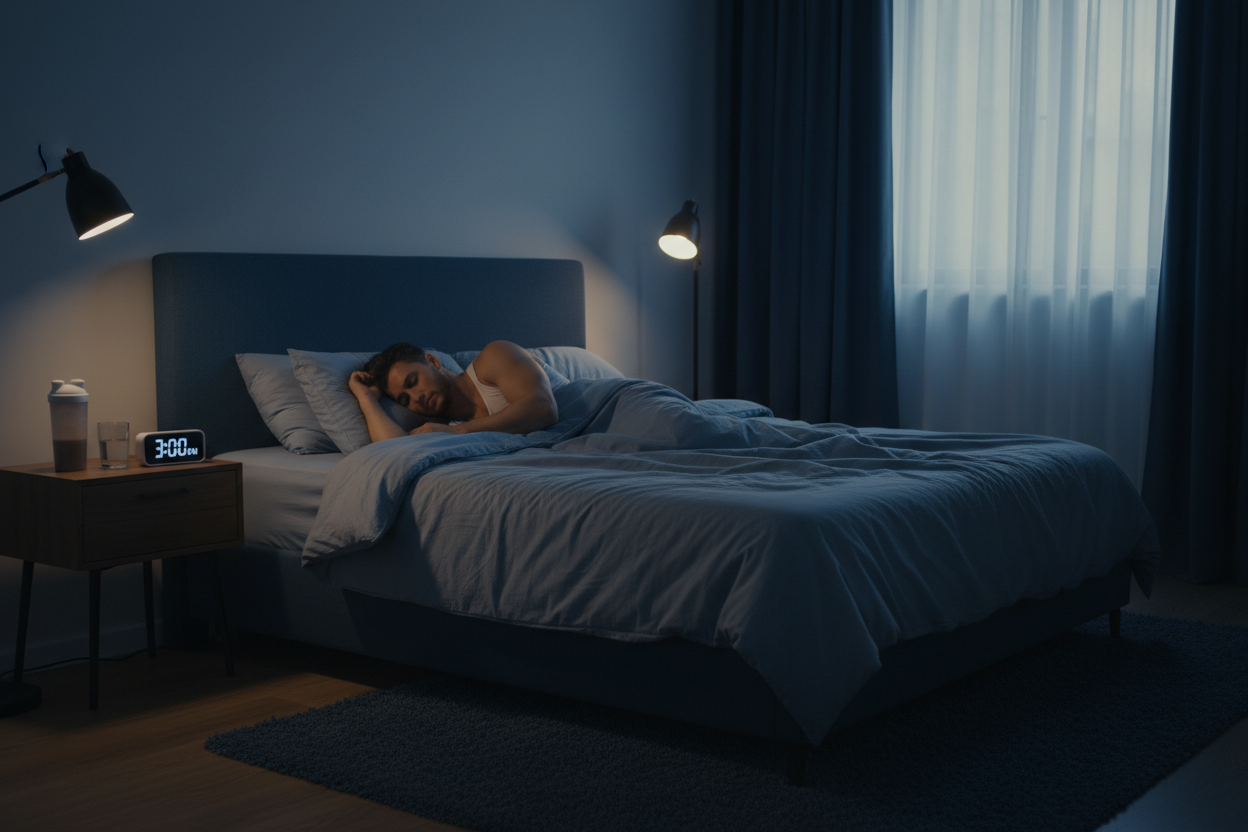
growth hormoneSleep & Muscle Growth: Why Recovery Happens at Night
You build muscle in the gym — but you grow it in bed. Sleep is the most underrated performance supplement there is. Here’s why, and how to make your nights work harder for recovery.
Quick answer: Most muscle repair and growth-hormone release happens during deep sleep. To support it, aim for 7–9 hours, and consider a slow-release protein plus magnesium before bed to feed overnight repair.
Why does muscle grow at night?
During deep sleep, your body releases the bulk of its daily growth hormone and ramps up tissue repair. This is when the micro-damage from training is actually rebuilt into stronger muscle. Skimp on sleep and you blunt that repair, raise stress hormones like cortisol, and undercut the very training you worked hard for — which is why chronic under-sleeping stalls progress even when the gym work is good.
Sleep, hormones and protein
Muscle repair runs on a steady supply of amino acids. Because you fast for 7–9 hours overnight, the pool of amino acids in your blood dips — so a slow-digesting protein before bed can keep feeding repair through the night. A slow-release option like AFTER DARK is designed for exactly this, providing a gradual drip of protein rather than a quick spike.
Night-time nutrition that helps recovery
| What |
Why |
| Slow protein before bed |
Steady overnight amino supply for repair |
| Magnesium & zinc |
Support muscle function and relaxation |
| Consistent wind-down |
Deeper, more restorative sleep |
For the minerals, ZMA or Magnesium + Ashwagandha & B6 pair magnesium with supporting nutrients for the evening.
How to sleep for muscle growth
Treat sleep like a training session you never skip. Keep consistent bed and wake times, make the room dark and cool, and build a screen-free wind-down so your nervous system can downshift. Limit late caffeine and heavy alcohol, both of which fragment deep sleep. These free habits move the needle more than any supplement — the supplements simply support them.
What happens when you don’t sleep enough
Even a few nights of short sleep can reduce strength, impair recovery, raise appetite and blunt muscle gain over time. If you’re training hard but not progressing, sleep is one of the first things worth auditing — before adding another supplement.
Frequently asked questions
How much sleep do I need to build muscle?
Most active adults do best on 7–9 hours; athletes often need the upper end.
Should I eat protein before bed?
A slow-release protein before bed can support overnight recovery, especially if you train hard.
Does poor sleep really affect muscle growth?
Yes — sleep loss lowers recovery, raises stress hormones and can impair strength and muscle gain over time.
Does magnesium help with sleep and recovery?
It supports relaxation and normal muscle function, which is why many people take it in the evening.
The bottom line
Protect your sleep like a training session. Add a slow-release protein and magnesium, and you turn every night into recovery time.
This article is for general information and isn’t medical advice. If you have a health condition or take medication, check with a professional first.
<div class="dynamic-checkout__content" id="dynamic-checkout-cart" data-shopify="dynamic-checkout-cart"> <shopify-accelerated-checkout-cart wallet-configs="[{"supports_subs":true,"supports_def_opts":false,"name":"shop_pay","wallet_params":{"shopId":86998679862,"merchantName":"Bio-Synergy","personalized":true}},{"supports_subs":true,"supports_def_opts":false,"name":"paypal","wallet_params":{"shopId":86998679862,"countryCode":"GB","merchantName":"Bio-Synergy","phoneRequired":true,"companyRequired":false,"shippingType":"shipping","shopifyPaymentsEnabled":true,"hasManagedSellingPlanState":false,"requiresBillingAgreement":false,"gatewayType":"CONNECTED","merchantId":"BX39SM5AURRZW","sdkUrl":"https://www.paypal.com/sdk/js?components=buttons\u0026commit=false\u0026currency=GBP\u0026locale=ja_JP\u0026client-id=AexZEtAxk09Ncgj6FSWFFyGKbxxAZ_LTyJ2DPdJWl1YUlecinmc5AfIaRF2qYjWlusWahlzz6SVkY5Ci\u0026merchant-id=BX39SM5AURRZW\u0026intent=authorize","serviceableCountryCodes":["AC","AD","AE","AF","AG","AI","AL","AM","AO","AR","AT","AU","AW","AX","AZ","BA","BB","BD","BE","BF","BG","BH","BI","BJ","BL","BM","BN","BO","BQ","BR","BS","BT","BW","BY","BZ","CA","CC","CD","CF","CG","CH","CI","CK","CL","CM","CN","CO","CR","CV","CW","CX","CY","CZ","DE","DJ","DK","DM","DO","DZ","EC","EE","EG","EH","ER","ES","ET","FI","FJ","FK","FO","FR","GA","GB","GD","GE","GF","GG","GH","GI","GL","GM","GN","GP","GQ","GR","GS","GT","GW","GY","HK","HN","HR","HT","HU","ID","IE","IL","IM","IN","IO","IQ","IS","IT","JE","JM","JO","JP","KE","KG","KH","KI","KM","KN","KR","KW","KY","KZ","LA","LB","LC","LI","LK","LR","LS","LT","LU","LV","LY","MA","MC","MD","ME","MF","MG","MK","ML","MM","MN","MO","MQ","MR","MS","MT","MU","MV","MW","MX","MY","MZ","NA","NC","NE","NF","NG","NI","NL","NO","NP","NR","NU","NZ","OM","PA","PE","PF","PG","PH","PK","PL","PM","PN","PS","PT","PY","QA","RE","RO","RS","RU","RW","SA","SB","SC","SD","SE","SG","SH","SI","SJ","SK","SL","SM","SN","SO","SR","SS","ST","SV","SX","SZ","TA","TC","TD","TF","TG","TH","TJ","TK","TL","TM","TN","TO","TR","TT","TV","TW","TZ","UA","UG","UM","US","UY","UZ","VA","VC","VE","VG","VN","VU","WF","WS","XK","YE","YT","ZA","ZM","ZW"]}}]" access-token="247581fa6a77d56781a1eae7565dc4a2" buyer-country="GB" buyer-locale="ja" buyer-currency="GBP" shop-id="86998679862" cart-id="5bf93866fcf2ced296216d39608bf9dd" enabled-flags="["a1d1f9a1"]" > <div class="wallet-button-wrapper"> <ul class='wallet-cart-grid wallet-cart-grid--skeleton' role="list" data-shopify-buttoncontainer="true"> <li data-testid='grid-cell' class='wallet-cart-button-container'><div class='wallet-cart-button wallet-cart-button__skeleton' role='button' disabled aria-hidden='true'> </div></li><li data-testid='grid-cell' class='wallet-cart-button-container'><div class='wallet-cart-button wallet-cart-button__skeleton' role='button' disabled aria-hidden='true'> </div></li> </ul> </div> </shopify-accelerated-checkout-cart> </div>