high protein dietHow Much Protein Do You Really Need Per Day?
Protein is the one macronutrient almost everyone agrees they should eat more of — but “more” isn’t a number. Whether your goal is building muscle, losing fat, or simply staying strong as you age, the right daily target is different. This guide breaks down exactly how much protein you need, why it changes with your goals, and the easiest ways to hit your number.
Quick answer: Active people generally need 1.2–1.6g of protein per kg of bodyweight a day; those building muscle need 1.6–2.2g/kg, and people dieting to lose fat while protecting muscle often need the most, around 1.8–2.4g/kg. Spread it across 3–4 meals.
The baseline: what the guidelines actually say
Government guidelines set the Reference Nutrient Intake at around 0.75g per kg of bodyweight per day — roughly 56g for an average man and 45g for an average woman. But that figure is the amount needed to prevent deficiency, not the amount that helps you build muscle, recover from training, or hold onto lean mass while dieting. For anyone active, the research points considerably higher, because training increases both the breakdown and the rebuilding of muscle protein.
How much protein for your goal?
| Goal |
Daily protein |
For an 80kg person |
| General health (sedentary) |
0.75–1.0 g/kg |
~60–80g |
| Active / general fitness |
1.2–1.6 g/kg |
~96–128g |
| Building muscle |
1.6–2.2 g/kg |
~128–176g |
| Losing fat (preserving muscle) |
1.8–2.4 g/kg |
~144–192g |
| Over 50 (protecting muscle & bone) |
1.2–1.5 g/kg |
~96–120g |
Two things stand out. First, people trying to lose weight often need the most protein, not the least — a higher intake protects the muscle you’d otherwise lose in a calorie deficit and keeps you fuller for longer, which makes the diet easier to stick to. Second, protein needs rise with age: after 50 the body becomes less efficient at turning dietary protein into muscle (a phenomenon called anabolic resistance), so the target goes up, not down.
Why protein quality and leucine matter
Not all protein is equal. Muscle building is switched on by leucine, an amino acid found in higher amounts in animal proteins like whey, eggs and meat. A protein source that delivers enough leucine and all nine essential amino acids is called “complete.” This is why whey is the research benchmark, and why plant eaters benefit from blends (such as pea and rice) that combine sources to cover every amino acid.
Does timing matter?
Total daily protein is what matters most — but how you spread it helps. Research suggests muscle protein synthesis is best supported by eating 20–40g of protein across 3–4 meals, rather than loading it all into one sitting. A practical rule: aim for a palm-sized portion of protein (or a scoop of protein powder) at each main meal, plus one around training.
The best sources to hit your number
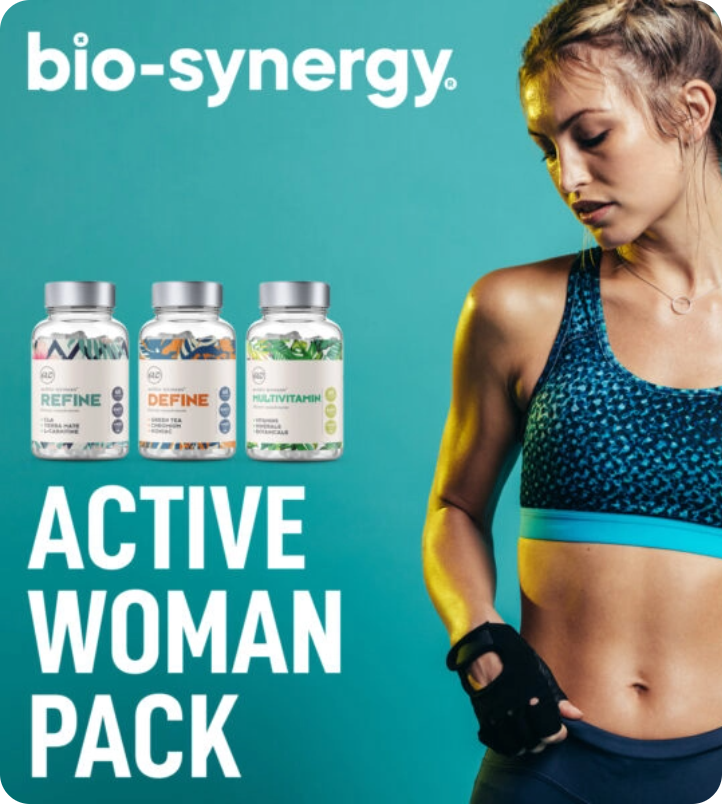
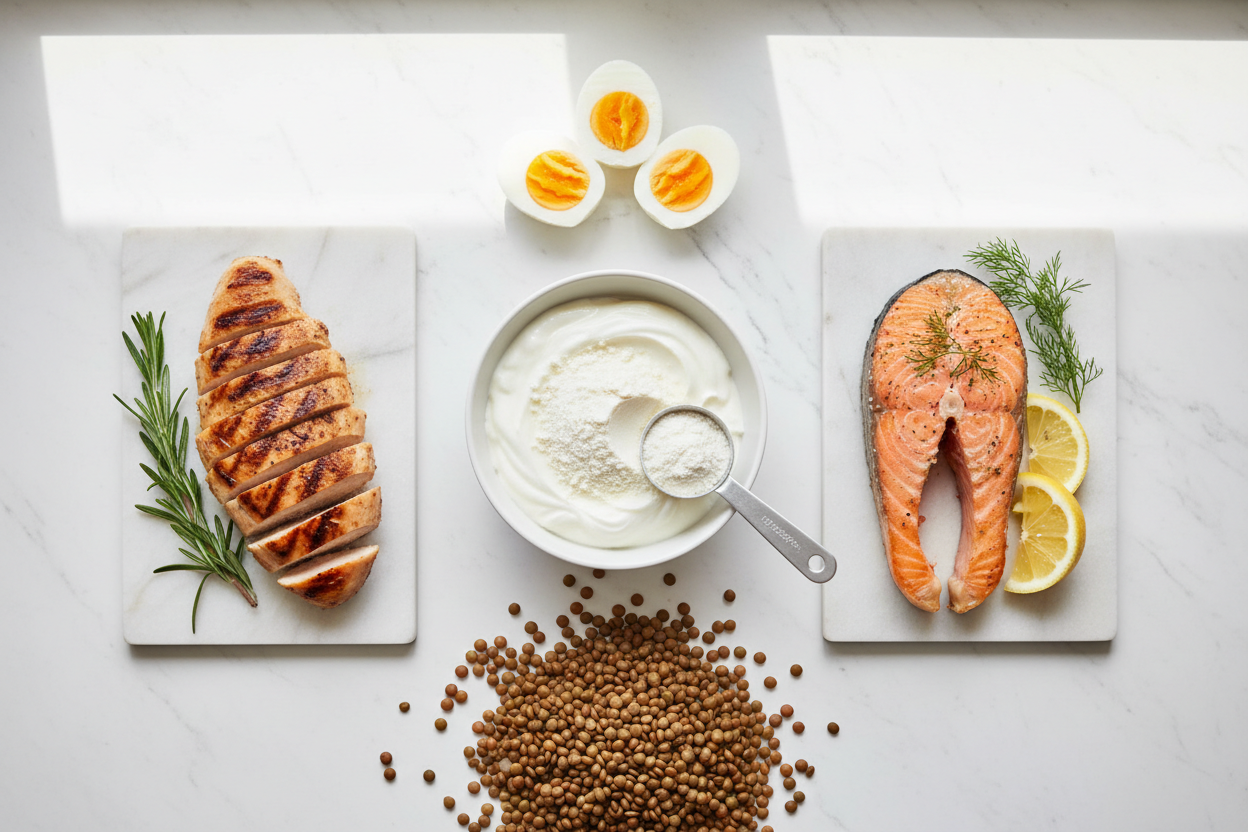
Whole foods first: chicken, fish, eggs, dairy, lean beef, tofu, beans and lentils. But once your target climbs past 120–150g a day, food alone can get tricky — and that’s where a quality supplement earns its place. A fast whey like Whey Better® delivers over 92% protein; Activate pairs protein with vitamins for women; a slow-release AFTER DARK feeds overnight recovery; and Lean & Green offers a complete vegan option.
How to calculate your target in 30 seconds
Take your bodyweight in kg, multiply by the number for your goal, and divide across 3–4 meals. Example: an 80kg person building muscle → 80 × 1.8 = 144g/day → roughly 36g per meal across four meals. Adjust as your weight and training change.
Frequently asked questions
How much protein do I need to build muscle?
Around 1.6–2.2g per kg of bodyweight per day, combined with resistance training, gives the best muscle-building results for most people.
Can you eat too much protein?
For healthy people, high-protein diets are well tolerated. There’s little added muscle benefit beyond ~2.2g/kg, so going much higher offers diminishing returns.
Does protein help with weight loss?
Yes. It’s the most satiating macronutrient and protects muscle in a deficit, which helps keep your metabolism higher. See our guide on how protein reduces appetite.
Is protein powder necessary?
No — but it’s the most convenient, cost-effective way to top up when whole foods fall short, especially on higher targets.
The bottom line
Most active people undereat protein. Find your number from the table, spread it across the day, prioritise complete sources, and lean on a quality protein supplement to close the gap on busy days. Get this one macro right and muscle, recovery, fat loss and healthy ageing all get easier.
This article is for general information and isn’t medical advice. If you have a health condition or take medication, check with a professional first.
<div class="dynamic-checkout__content" id="dynamic-checkout-cart" data-shopify="dynamic-checkout-cart"> <shopify-accelerated-checkout-cart wallet-configs="[{"supports_subs":true,"supports_def_opts":false,"name":"shop_pay","wallet_params":{"shopId":86998679862,"merchantName":"Bio-Synergy","personalized":true}},{"supports_subs":true,"supports_def_opts":false,"name":"paypal","wallet_params":{"shopId":86998679862,"countryCode":"GB","merchantName":"Bio-Synergy","phoneRequired":true,"companyRequired":false,"shippingType":"shipping","shopifyPaymentsEnabled":true,"hasManagedSellingPlanState":false,"requiresBillingAgreement":false,"gatewayType":"CONNECTED","merchantId":"BX39SM5AURRZW","sdkUrl":"https://www.paypal.com/sdk/js?components=buttons\u0026commit=false\u0026currency=GBP\u0026locale=ja_JP\u0026client-id=AexZEtAxk09Ncgj6FSWFFyGKbxxAZ_LTyJ2DPdJWl1YUlecinmc5AfIaRF2qYjWlusWahlzz6SVkY5Ci\u0026merchant-id=BX39SM5AURRZW\u0026intent=authorize","serviceableCountryCodes":["AC","AD","AE","AF","AG","AI","AL","AM","AO","AR","AT","AU","AW","AX","AZ","BA","BB","BD","BE","BF","BG","BH","BI","BJ","BL","BM","BN","BO","BQ","BR","BS","BT","BW","BY","BZ","CA","CC","CD","CF","CG","CH","CI","CK","CL","CM","CN","CO","CR","CV","CW","CX","CY","CZ","DE","DJ","DK","DM","DO","DZ","EC","EE","EG","EH","ER","ES","ET","FI","FJ","FK","FO","FR","GA","GB","GD","GE","GF","GG","GH","GI","GL","GM","GN","GP","GQ","GR","GS","GT","GW","GY","HK","HN","HR","HT","HU","ID","IE","IL","IM","IN","IO","IQ","IS","IT","JE","JM","JO","JP","KE","KG","KH","KI","KM","KN","KR","KW","KY","KZ","LA","LB","LC","LI","LK","LR","LS","LT","LU","LV","LY","MA","MC","MD","ME","MF","MG","MK","ML","MM","MN","MO","MQ","MR","MS","MT","MU","MV","MW","MX","MY","MZ","NA","NC","NE","NF","NG","NI","NL","NO","NP","NR","NU","NZ","OM","PA","PE","PF","PG","PH","PK","PL","PM","PN","PS","PT","PY","QA","RE","RO","RS","RU","RW","SA","SB","SC","SD","SE","SG","SH","SI","SJ","SK","SL","SM","SN","SO","SR","SS","ST","SV","SX","SZ","TA","TC","TD","TF","TG","TH","TJ","TK","TL","TM","TN","TO","TR","TT","TV","TW","TZ","UA","UG","UM","US","UY","UZ","VA","VC","VE","VG","VN","VU","WF","WS","XK","YE","YT","ZA","ZM","ZW"]}}]" access-token="247581fa6a77d56781a1eae7565dc4a2" buyer-country="GB" buyer-locale="ja" buyer-currency="GBP" shop-id="86998679862" cart-id="d9d739fed3f98e56e6fba5706ab6eda2" enabled-flags="["a1d1f9a1"]" > <div class="wallet-button-wrapper"> <ul class='wallet-cart-grid wallet-cart-grid--skeleton' role="list" data-shopify-buttoncontainer="true"> <li data-testid='grid-cell' class='wallet-cart-button-container'><div class='wallet-cart-button wallet-cart-button__skeleton' role='button' disabled aria-hidden='true'> </div></li><li data-testid='grid-cell' class='wallet-cart-button-container'><div class='wallet-cart-button wallet-cart-button__skeleton' role='button' disabled aria-hidden='true'> </div></li> </ul> </div> </shopify-accelerated-checkout-cart> </div>