adaptogenAshwagandha Benefits: Stress, Sleep & Performance
Ashwagandha has gone from ancient Ayurvedic herb to one of the most-searched supplements in wellness. But what does it actually do, and is it worth taking? Here’s what the research supports — and what it doesn’t.
Quick answer: Ashwagandha is an adaptogen with its strongest evidence for reducing stress and cortisol and improving sleep quality. Studies typically use 300–600mg of a standardised root extract daily, taken consistently over several weeks.
What is ashwagandha?
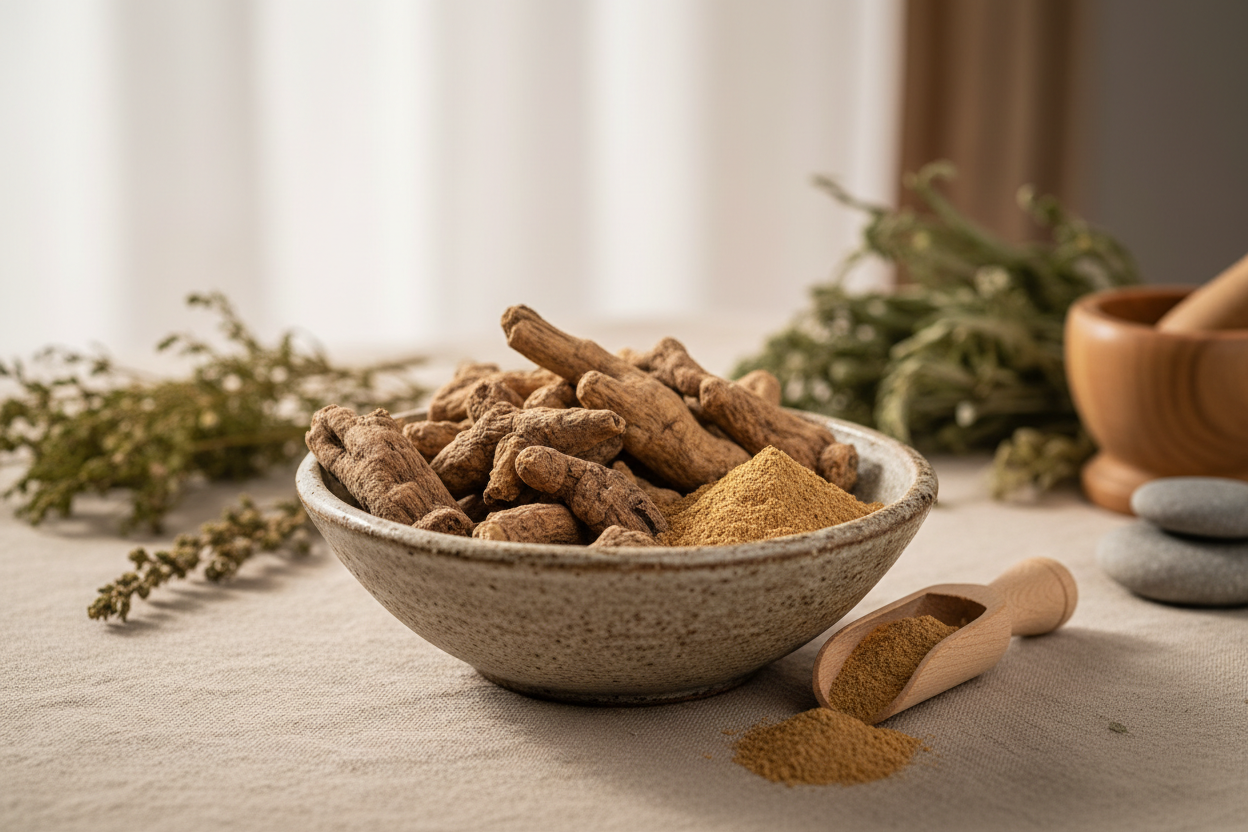
Ashwagandha (Withania somnifera) is an adaptogen — a plant traditionally used to help the body cope with stress. Most quality research uses a standardised root extract rather than raw powder, which matters when you’re comparing products: the dose and standardisation are what the studies are actually testing.
What are the benefits of ashwagandha?
| Benefit |
Strength of evidence |
| Lower stress & cortisol |
Strong — several human trials |
| Better sleep quality |
Good — falls asleep faster, sleeps sounder |
| Strength & recovery |
Emerging — small gains alongside training |
| Mood & focus |
Reported alongside lower stress |
The stress and sleep findings are the most consistent across studies. Several randomised trials link a standardised extract to lower perceived stress and reduced cortisol, the body’s main stress hormone. Sleep benefits — falling asleep faster and waking less — show up in multiple studies too. The strength and recovery benefits are real in some trials but smaller and less certain, so treat those as a possible bonus rather than the main reason to take it.
How much ashwagandha should you take, and when?
Trials typically use 300–600mg of a standardised extract per day. Many people take it in the evening to support wind-down, though the stress benefits don’t strictly depend on timing. Convenient options include Chill Ashwagandha Gummies and Magnesium + Ashwagandha & B6, which pairs it with magnesium for evening relaxation.
Who should be cautious?
Ashwagandha is generally well tolerated, but it isn’t recommended during pregnancy, and it can interact with thyroid, sedative and immune-modulating medications. If you have a health condition or take regular medication, check with your GP before starting. As with any adaptogen, it works best as one part of a broader routine — not a magic fix for chronic stress.
How long until it works?
Ashwagandha isn’t a fast-acting sedative. In the studies showing benefits, participants took it daily for several weeks before stress and sleep measures improved. Consistency is the key variable, so give it a fair trial of at least a month.
Frequently asked questions
Is ashwagandha safe to take daily?
For most healthy adults, short-to-medium-term daily use is well tolerated. Follow the label and take breaks if advised.
How long does ashwagandha take to work?
Stress and sleep benefits in trials usually build over a few weeks of consistent use, not overnight.
Should I take ashwagandha morning or night?
Either works for stress; evening is popular because of the sleep and relaxation angle.
Does ashwagandha help with sleep?
Several studies suggest it can help you fall asleep faster and sleep more soundly when taken consistently.
The bottom line
Ashwagandha’s best-supported role is stress and sleep support. Taken consistently in the evening at a standardised 300–600mg, it’s a low-risk addition to a healthy routine.
This article is for general information and isn’t medical advice. If you have a health condition or take medication, check with a professional first.
<div class="dynamic-checkout__content" id="dynamic-checkout-cart" data-shopify="dynamic-checkout-cart"> <shopify-accelerated-checkout-cart wallet-configs="[{"supports_subs":true,"supports_def_opts":false,"name":"shop_pay","wallet_params":{"shopId":86998679862,"merchantName":"Bio-Synergy","personalized":true}},{"supports_subs":true,"supports_def_opts":false,"name":"paypal","wallet_params":{"shopId":86998679862,"countryCode":"GB","merchantName":"Bio-Synergy","phoneRequired":true,"companyRequired":false,"shippingType":"shipping","shopifyPaymentsEnabled":true,"hasManagedSellingPlanState":false,"requiresBillingAgreement":false,"gatewayType":"CONNECTED","merchantId":"BX39SM5AURRZW","sdkUrl":"https://www.paypal.com/sdk/js?components=buttons\u0026commit=false\u0026currency=JPY\u0026locale=ja_JP\u0026client-id=AexZEtAxk09Ncgj6FSWFFyGKbxxAZ_LTyJ2DPdJWl1YUlecinmc5AfIaRF2qYjWlusWahlzz6SVkY5Ci\u0026merchant-id=BX39SM5AURRZW\u0026intent=authorize","serviceableCountryCodes":["AC","AD","AE","AF","AG","AI","AL","AM","AO","AR","AT","AU","AW","AX","AZ","BA","BB","BD","BE","BF","BG","BH","BI","BJ","BL","BM","BN","BO","BQ","BR","BS","BT","BW","BY","BZ","CA","CC","CD","CF","CG","CH","CI","CK","CL","CM","CN","CO","CR","CV","CW","CX","CY","CZ","DE","DJ","DK","DM","DO","DZ","EC","EE","EG","EH","ER","ES","ET","FI","FJ","FK","FO","FR","GA","GB","GD","GE","GF","GG","GH","GI","GL","GM","GN","GP","GQ","GR","GS","GT","GW","GY","HK","HN","HR","HT","HU","ID","IE","IL","IM","IN","IO","IQ","IS","IT","JE","JM","JO","JP","KE","KG","KH","KI","KM","KN","KR","KW","KY","KZ","LA","LB","LC","LI","LK","LR","LS","LT","LU","LV","LY","MA","MC","MD","ME","MF","MG","MK","ML","MM","MN","MO","MQ","MR","MS","MT","MU","MV","MW","MX","MY","MZ","NA","NC","NE","NF","NG","NI","NL","NO","NP","NR","NU","NZ","OM","PA","PE","PF","PG","PH","PK","PL","PM","PN","PS","PT","PY","QA","RE","RO","RS","RU","RW","SA","SB","SC","SD","SE","SG","SH","SI","SJ","SK","SL","SM","SN","SO","SR","SS","ST","SV","SX","SZ","TA","TC","TD","TF","TG","TH","TJ","TK","TL","TM","TN","TO","TR","TT","TV","TW","TZ","UA","UG","UM","US","UY","UZ","VA","VC","VE","VG","VN","VU","WF","WS","XK","YE","YT","ZA","ZM","ZW"]}}]" access-token="247581fa6a77d56781a1eae7565dc4a2" buyer-country="JP" buyer-locale="ja" buyer-currency="JPY" shop-id="86998679862" cart-id="09eb0f13fc7accbf48185547c231cf62" enabled-flags="["a1d1f9a1"]" > <div class="wallet-button-wrapper"> <ul class='wallet-cart-grid wallet-cart-grid--skeleton' role="list" data-shopify-buttoncontainer="true"> <li data-testid='grid-cell' class='wallet-cart-button-container'><div class='wallet-cart-button wallet-cart-button__skeleton' role='button' disabled aria-hidden='true'> </div></li><li data-testid='grid-cell' class='wallet-cart-button-container'><div class='wallet-cart-button wallet-cart-button__skeleton' role='button' disabled aria-hidden='true'> </div></li> </ul> </div> </shopify-accelerated-checkout-cart> </div>