



Protein Powder for Over 50s: Why Your Protein Needs Increase With Age
There's a widespread assumption that supplements protein powders, creatine, performance nutrition are for young people. For gym-goers in their twenties, athletes, bodybuilders. Not for people over 50.
This assumption is wrong. In fact, the case for protein supplementation becomes stronger with age, not weaker. The physiological changes that occur from the mid-30s onwards and accelerate through the 50s, 60s, and beyond make adequate protein intake more important, more difficult to achieve from diet alone, and more consequential for long-term health and independence than at any other life stage.
What Happens to Muscle After 50?
Sarcopenia the progressive age-related loss of muscle mass and function begins in your 30s and accelerates significantly in your 50s and 60s. Without intervention, adults lose approximately 3–5% of their muscle mass per decade from their 30s, with the rate increasing to 1–2% per year after 60.
This is not a cosmetic issue. Muscle mass is a primary determinant of metabolic rate, physical function, injury resilience, and independence in later life. Low muscle mass is associated with increased risk of type 2 diabetes, cardiovascular disease, falls, fractures, hospitalisation, and all-cause mortality.
The physiological drivers of sarcopenia include declining anabolic hormone levels (testosterone, oestrogen, growth hormone), reduced physical activity, chronic low-grade inflammation, and critically a reduced anabolic response to protein. This last factor is known as anabolic resistance: older muscle tissue requires more dietary protein to trigger the same degree of muscle protein synthesis as younger muscle.
Why Protein Requirements Increase With Age
The standard UK recommended daily intake for protein is 0.75g per kilogram of bodyweight a figure designed to prevent deficiency in the average sedentary adult. This is inadequate for preserving muscle mass in older adults, and particularly inadequate for those who exercise.
Current research strongly supports a protein intake of at least 1.2g/kg for older adults, with optimal outcomes at 1.6–2.0g/kg for those engaged in resistance training. For a 70kg woman over 50, that's 112–140g of protein daily substantially more than most people consume.
The higher requirement reflects two realities: first, anabolic resistance means each serving of protein produces less muscle protein synthesis than in a younger person, so more protein is needed per meal to generate an equivalent stimulus. Second, the muscle you do maintain becomes even more precious as natural capacity to rebuild declines, making every gram of protein a more important investment.
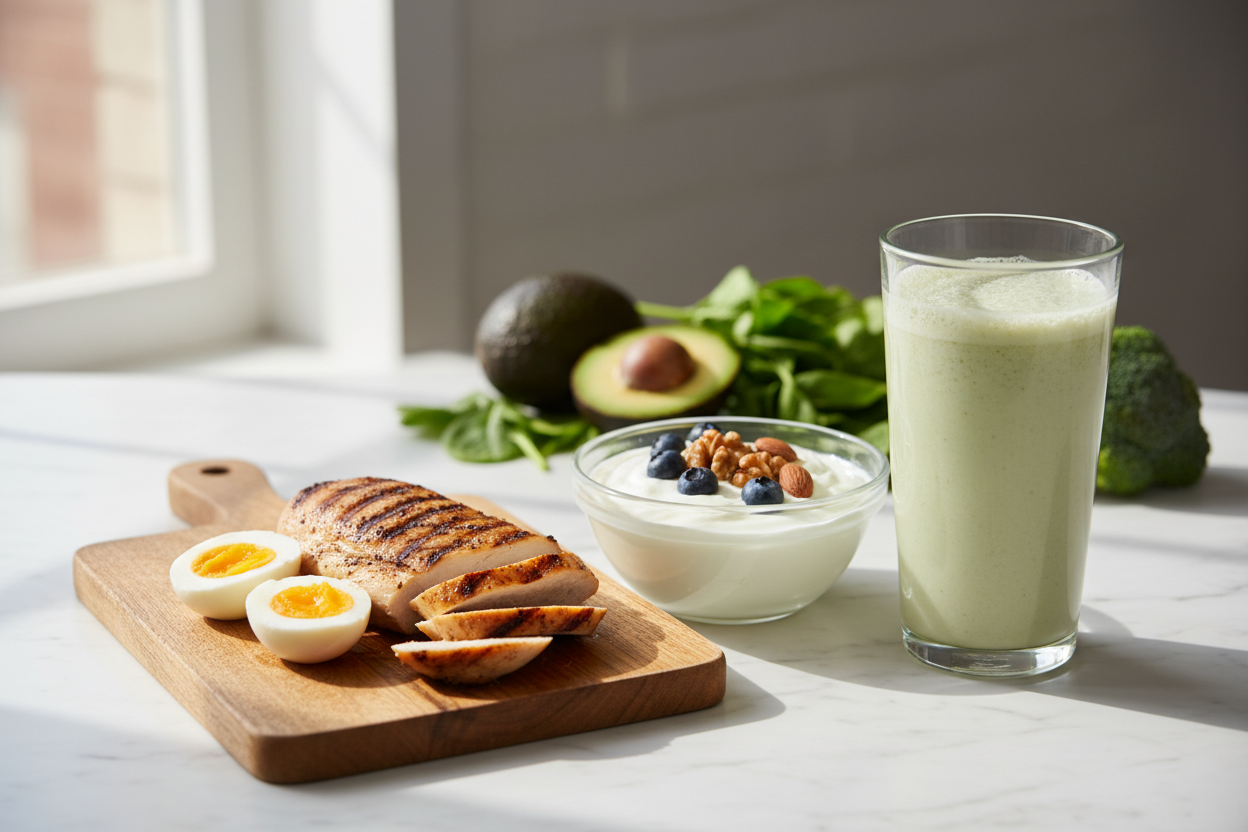
Meeting these targets from whole food sources alone is achievable but requires consistent, conscious effort across every meal. Many older adults particularly those with reduced appetite, dietary restrictions, or limited cooking capacity find that a protein supplement is the most practical and reliable way to close the gap.
The Benefits of Protein Supplementation for Over 50s
Muscle preservation and function
Multiple clinical trials confirm that protein supplementation, combined with resistance training, significantly reduces sarcopenia-related muscle loss in older adults. The combination of adequate protein and regular strength training is the most effective intervention available for preserving functional muscle mass more effective than either intervention alone.
Bone health
Adequate protein intake is associated with greater bone mineral density and reduced fracture risk. Protein provides the structural substrate for bone matrix, and the mechanical stimulus of resistance exercise supported by protein's muscle-preserving effects maintains the loading that bones need to maintain density.
Metabolic health
Higher protein intake supports blood sugar regulation by reducing glycaemic response to meals and improving insulin sensitivity. For post-menopausal women who face increased metabolic risk as oestrogen declines, this effect has meaningful practical value.
Recovery and resilience
Recovery from exercise and from everyday physical stressors including illness, surgery, and injury becomes more dependent on protein adequacy as you age. Adequate protein supports faster recovery, reduces the muscle loss associated with periods of illness or immobility, and supports immune function.
What Type of Protein Is Best for Over 50s?
Whey protein isolate is a particularly good choice for older adults. Its high leucine content is important leucine is the amino acid that most potently triggers muscle protein synthesis, and older adults require a higher leucine threshold to stimulate the same synthetic response as younger people. Whey isolate delivers more leucine per gram than most other protein sources.
Timing also matters more with age. Research shows that consuming a leucine-rich protein source at every meal not just after exercise produces better outcomes for muscle protein synthesis across the day. Aim for 25–40g of protein at each main meal, including breakfast, to maintain a continuous anabolic stimulus.
Digestive tolerance: many older adults have reduced gastric acid production, which can affect protein digestion. Hydrolysed whey protein partially pre-digested may be better tolerated and more rapidly absorbed in individuals who find standard whey causes discomfort.
Protein Plus Creatine: The Most Evidence-Backed Stack for Over 50s
If there is a single supplement combination most robustly supported by research for older adults, it is protein plus creatine, combined with a consistent resistance training programme. The evidence for this combination is substantial, consistent, and clinically meaningful.
Protein provides the building blocks for muscle repair and growth. Creatine enhances the ability to train intensely and recover quickly, amplifying the training stimulus and the muscle adaptation it produces. Together, they address both sides of the muscle preservation equation: supply (protein) and stimulus (creatine-enhanced training output).
This is not a young person's supplement stack. It's a middle-aged and older adult's most important nutritional priority.
Invest in your future strength
Bio-Synergy has been supporting serious nutrition since 1997. Our protein and creatine range is Informed Sport tested and built on the same evidence-based standards that professional athletes demand. Because everyone deserves that standard.
Shop at bio-synergy.uk