



How Protein Reduces Appetite: The Science Behind Protein and Satiety
Hunger is the enemy of every diet. You can have perfect nutritional knowledge, clear goals, and genuine motivation and still find yourself raiding the kitchen at 10pm because the calorie restriction you're imposing is making you miserable. Protein is the most powerful dietary tool for managing this problem.
Understanding why protein reduces appetite the specific hormonal and neurological mechanisms involved gives you the foundation to structure your nutrition intelligently rather than simply white-knuckling your way through a calorie deficit. This article explains the science clearly and practically.
The Satiety Hierarchy: Why Protein Is Different
Not all calories are equally satisfying. Research consistently shows that protein is the most satiating macronutrient more filling per calorie than either carbohydrates or fat. This is true across meal types, protein sources, and population groups.
The effect is substantial. A study published in the American Journal of Clinical Nutrition showed that participants who increased protein from 15% to 30% of calories spontaneously ate 441 fewer calories per day without being asked to restrict calories and without counting anything. The increased protein simply made them less hungry.
This is not a small effect. 441 calories per day is roughly the equivalent of eliminating a large meal from your intake — achieved not through willpower but through the automatic hormonal response to protein.
The Mechanisms: How Protein Actually Reduces Hunger
Hormone regulation
Protein consumption directly affects the hormones that control hunger and satiety. It reduces circulating levels of ghrelin the primary 'hunger hormone' and increases levels of several satiety hormones including peptide YY (PYY), GLP-1 (glucagon-like peptide-1), and cholecystokinin (CCK). These signals travel from the gut to the brain and reduce appetite at a neurological level.
Interestingly, GLP-1 which protein naturally stimulates is the same hormone targeted by the weight loss drugs semaglutide (Ozempic/Wegovy) and liraglutide. These pharmaceutical compounds mimic GLP-1's effects pharmacologically. Adequate dietary protein stimulates it naturally.
Thermic effect and metabolic cost
Protein has the highest thermic effect of any macronutrient — 20–30% of protein's caloric value is expended in digesting, absorbing, and processing it. This means that 100 calories of protein effectively deliver only 70–80 net calories, compared to 90–95 from carbohydrates and 97–98 from fat.
Beyond simple thermogenesis, protein stimulates metabolic rate through its role in muscle protein synthesis. A higher proportion of dietary calories directed towards muscle maintenance supports a higher resting metabolic rate.
Blood sugar stabilisation
High-protein meals produce a significantly lower glycaemic response than equivalent-calorie carbohydrate-based meals. The resulting blood sugar curve is flatter and more stable without the rapid rise and subsequent crash that follows high-glycaemic meals and triggers hunger rebound.
This blood sugar stabilisation effect is amplified when protein is combined with fibre-rich vegetables and complex carbohydrates rather than refined starches and sugars. The combination creates sustained satiety across a 4–6 hour window.
Cognitive reward and meal satisfaction
Beyond the hormonal mechanisms, protein-rich meals tend to be more physically satisfying they require more chewing, take longer to digest, and produce a more pronounced sense of fullness in the stomach. This cognitive and physical satisfaction reduces the urge to continue eating beyond caloric need a driver of overconsumption that operates independently of hormone signalling.
Protein and the GLP-1 Natural Connection
The parallel between dietary protein and GLP-1 receptor agonist drugs deserves elaboration. GLP-1 drugs like semaglutide have produced dramatic results in clinical weight loss trials but they are expensive, require injection or prescription, and carry side effect profiles including nausea, GI distress, and (at high doses) potential risks to thyroid tissue.
Optimising dietary protein is not a pharmacological equivalent — it cannot replicate the magnitude of GLP-1 drug effects. But it is a free, side-effect-free, sustainably implemented strategy that works through the same underlying biology. For many people, properly structured high-protein nutrition eliminates the need for pharmaceutical intervention. For others who are using medical weight loss support, high protein intake amplifies and sustains the results.
If you're hearing about GLP-1 drugs and wondering whether there's a nutritional equivalent optimised protein intake is the closest science has to offer.
Practical Strategies: Using Protein to Control Appetite
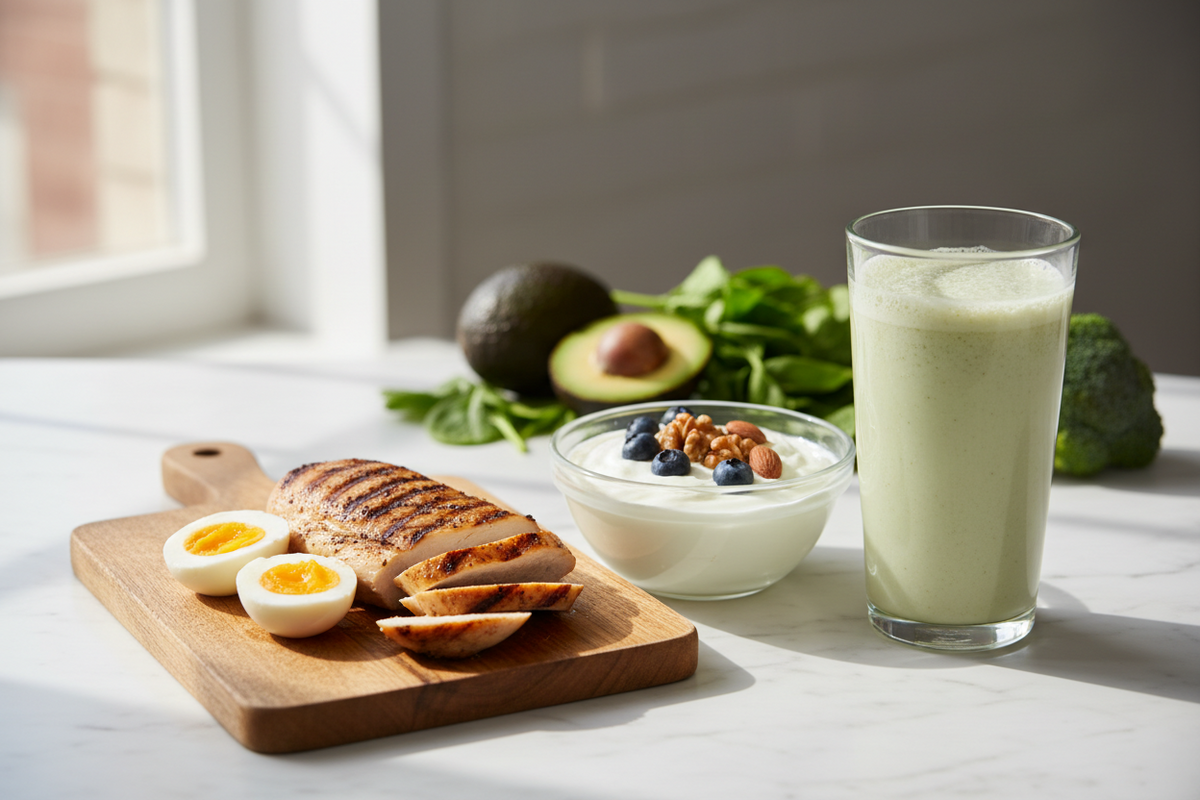
Start with breakfast. A high-protein breakfast is one of the most effective single interventions for appetite control across the entire day. Studies show that high-protein breakfasts reduce total calorie intake at subsequent meals and decrease snacking behaviour in the afternoon and evening. Aim for 25–35g of protein at breakfast eggs, Greek yoghurt, cottage cheese, or a high-quality protein shake.
Spread protein across the day. Rather than concentrating protein in one or two large servings, distribute 20–30g across 4–5 meals and snacks. This maintains satiety hormones at consistently elevated levels throughout the day rather than allowing hunger to build between infrequent high-protein meals.
Make protein the foundation of each meal. Before thinking about what carbohydrates or fats to include, decide on your protein source and portion. Build the rest of the meal around it. This structural approach ensures you hit your protein target without excessive total calorie intake.
Use protein supplements strategically. A high-quality protein shake provides a convenient, fast, and calorie-efficient way to hit protein targets particularly at meals when whole food preparation is difficult or post-workout when absorption speed matters.
Practical target: Aim for 30–40g of protein at breakfast, 25–35g at lunch and dinner, and 15–20g in snacks if needed. Spread across the day, this approach maintains satiety hormones at levels that make calorie control feel manageable rather than miserable.
Fuel your control
Bio-Synergy's protein range delivers clean, high-quality protein at every meal. Informed Sport tested. Simple ingredients. Made to support real goals not just fill a shaker.
Shop protein at bio-synergy.uk